
Last Updated on 6 August 2026 by Daniel G. Taylor

Estimated reading time: 6 minutes
You’d think that after a decade as a copywriter, I’d have known better when it comes to writing headlines.
But last week I broke the cardinal rule of good copywriting. I sent out an article in my email newsletter, also published on my blog, with the headline: Do What Seth Godin Says. A terrible headline!
Before I get into the specifics of why it’s such a bad headline, let me give you some context.
This screenshot shows the stats for the overall performance of my email newsletter:
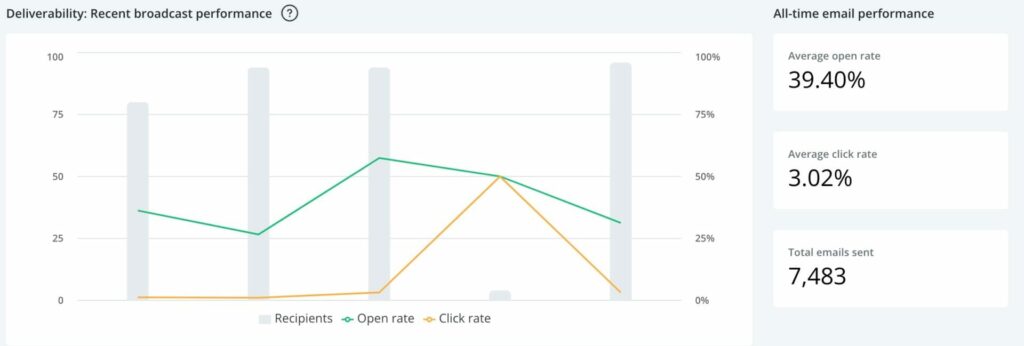
As you can see, that last email/blog post tanked. Indeed, until yesterday, it only had a 23.4% open rate. And my average open rate is 39.40% (if you’re not already getting my email newsletter, fill out this form and you’ll get it every Friday morning, plus a monthly reading list).
Key Takeaways
- The author reflects on a poorly chosen headline and its impact on newsletter performance, achieving only a 23.4% open rate compared to an average of 39.40%.
- The headline ‘Do What Seth Godin Says’ lacks urgency, usefulness, and specificity, resulting in a low score using the framework of The 4 U’s.
- Great headlines should be Urgent, Useful, Unique, and Ultra-Specific; a good headline score should aim for three or four points.
- The article provides the author’s experiences with writing headlines and suggests best practices for creating effective subject lines for emails and marketing materials.
- Despite a low open rate, some readers found value in the content, highlighting the importance of compelling headlines to attract an audience.
Table of contents
So What’s Wrong with Writing a Headline Like, “Do What Seth Godin Says”?
First, most people do not know who Seth Godin is. And if you don’t know who he is, why would you care what he said, and why would you read the email?
Second, the headline offers no benefit to the reader, explaining the value they’ll get because of investing their time in the article.
So how could I have rewritten the headline?
A Highly Effective Framework for Writing Headlines
I’m an AWAI-verified copywriter, and while I was studying with American Writers and Artists Inc, I learned a formula for creating powerful headlines, known as “The 4 U’s.”
Great headlines are:
- Urgent: They give your readers a potent reason to continue reading right now.
- Useful: The headline offers something that’s of value to the prospect.
- Unique: They suggest that what you’re offering differs from every competing product in the marketplace.
- Ultra-Specific: They avoid being vague.
The way to use The 4 U’s is that after you’ve come up with a list of potential headlines (how to do that is a topic for another time), then give each headline you’ve written a score for each one of The 4 U’s.
Example of a Bad Headline: 1/4
For example, let’s apply The 4 U’s to “Do What Seth Godin Says”:
- Urgent: No, so it gets a zero.
- Useful: No, so it gets a zero here, too.
- Unique: OK, I’ll give myself a point for this one. The idea of doing what Seth Godin says is certainly unique.
- Ultra-Specific: No, so another zero.
So my total score (just in case you haven’t already added it up) is one out of four.
Writing headlines, great headlines, means you want to aim for a score of three or four using The 4 U’s.
Example of a Good Headline: 3/4
Now let’s take another example and cross the fourth wall, examining The 4 U’s as they relate to the headline of this article: “Headlines That Work vs. Headlines That Don’t Work“:
- Urgent: No, so it gets a zero here.
- Useful: Yep, the headline promises that if you read the article, you’ll learn something useful for writing headlines. So I’ll give myself a point here.
- Unique: Yep, I Googled and while there are lots of “Headlines That Work” articles out there, mine has a unique headline. Go me! Also, scored a point here.
- Ultra-Specific: Yep. It promises you’ll learn about headlines that work and headlines that don’t work. So another point.
In total then, the headline of this article gets a score of three out of four points on The 4 U’s.
Now, and for that reason, I wrote this article to give entrepreneurs some tips on how to write effective subject headings for emails or headlines for other marketing materials they create to sell your services.
My areas of specialisation are:
- SEO and AIO (AI Optimisation) copywriting, meaning I get you found both in Google search and in AI-generated answers — ChatGPT, Perplexity, Google AI Overviews — so prospects find you whichever way they’re searching, and once they land, the copy turns them into leads you can convert into clients.
- Ghostwriting, primarily books, for business owners who want a body of work that builds authority rather than a single article that gets forgotten in a week.
- Retainer content strategy, combining ongoing blog content with SEO work into a single package, so you’re not paying for articles that never rank and never get found.
- The Entrepreneur’s Action Club, my membership community for business owners who want visibility and authority without figuring it out alone — practical strategy, direct feedback, and a room full of people playing the same game you are.
OK, commercial over.
While I didn’t have as many people read last week’s email newsletter as usual, I had some people read it. One of these people was Roger Donnelley, CEO of the NDIS Provider, The SALT Foundation, my retainer client.
He wrote this lovely comment:
You are on the way to becoming a marketing genius and will not have to quote Seth anymore when posting.
Roger Donnelley, Founder & CEO, The SALT Foundation
So even though few people read the article, those who did got something out of it.
But if no one opens your email or clicks on the link to your blog post, what’s the point?
And my ultimate point is that that’s the exact purpose of a headline: to get your readers to keep reading.
Action Steps
- Write five to ten possible headlines for your next email or article before you pick one. The score comes from comparison, not a single draft.
- Score each headline against The 4 U’s — Urgent, Useful, Unique, Ultra-Specific. Aim for three or four out of four before you hit send.
- Check the Useful score specifically against a stranger’s eyes, not a warm subscriber’s. Ask whether someone who’s never heard of you would understand the benefit in five seconds.
- Track your open rate for a month once you start scoring headlines this way, and compare it against your current baseline.
Conclusion
Headlines carry the weight of everything that follows them. Score yours honestly against The 4 U’s before you send, and you’ll stop losing readers before they’ve even opened the email. My own open rate proved the cost of skipping that step. Yours doesn’t have to.
It takes a humble pro to publicly admit their mistake! We all goof up sometimes. It’s whether you get back up. Great analysis.
Thank you, Sarah. I’m glad my goof-up helped to remind you that we’re all human and it’s okay to make mistakes. It was a humbling experience for me and I’m grateful that I had the opportunity to learn from it.